Portfolio - Phillip Andrew Lewis
Last Days of living
Music by Phillip Andrew Lewis & Simon Keep / live performances + physical releases + compositions for moving image
Last Days of Living (LDoL) is the project of trans-Atlantic duo Simon Keep from Suffolk, UK and Phillip Andrew Lewis from Pittsburgh, US.
Working with sonic imagery and cinematic textures they manipulate sound using treated guitars, pianos, synthesizers, electronics, tape loops, and field recordings. Their ambient compositions create space for deep contemplation.Their music appeared in the documentary film, X Trillion. They have performed in the UK at Colchester Arts Centre, The Minories, Brian Eno’s Woodbridge Ambient Music Festival, among others. Their US debut was at Pittsburgh International Airport series Music for Airports.
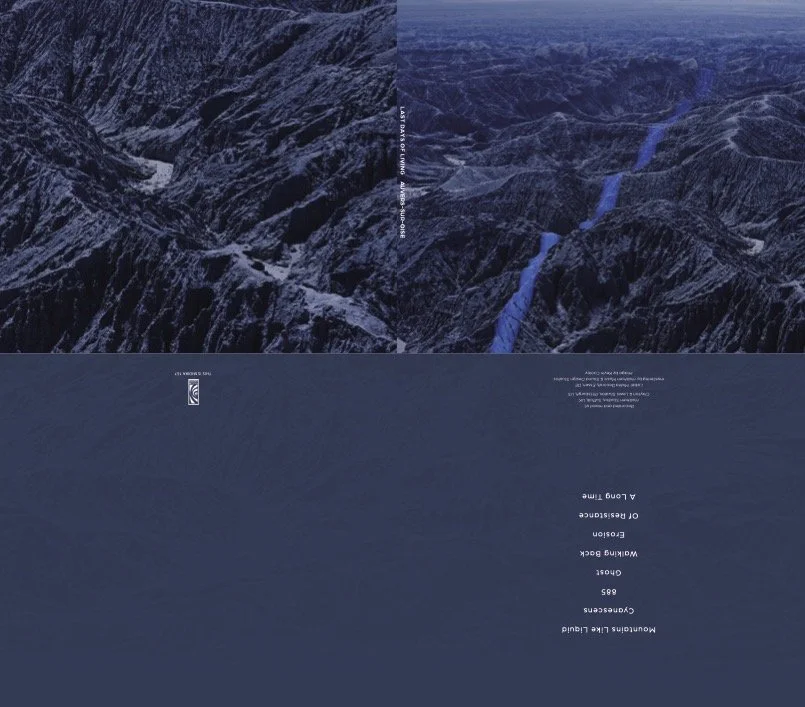
Below is the artwork and video from the forthcoming release with Midira Records (Germany). Auvers-sur-Oise was recorded and processed during the world-wide pandemic as an escape into a fragmented space washed with blurs of light and shadow. Working remotely during lockdown from separate countries, members of Last Days of Living gathered weekly for over a year to compose the music on this ambient drone album. The tracks render a new psychological place with visions and apparitions. Using old reel to reel tape machines to record and process the sound, the recording itself is aging and fragile.

AA 4
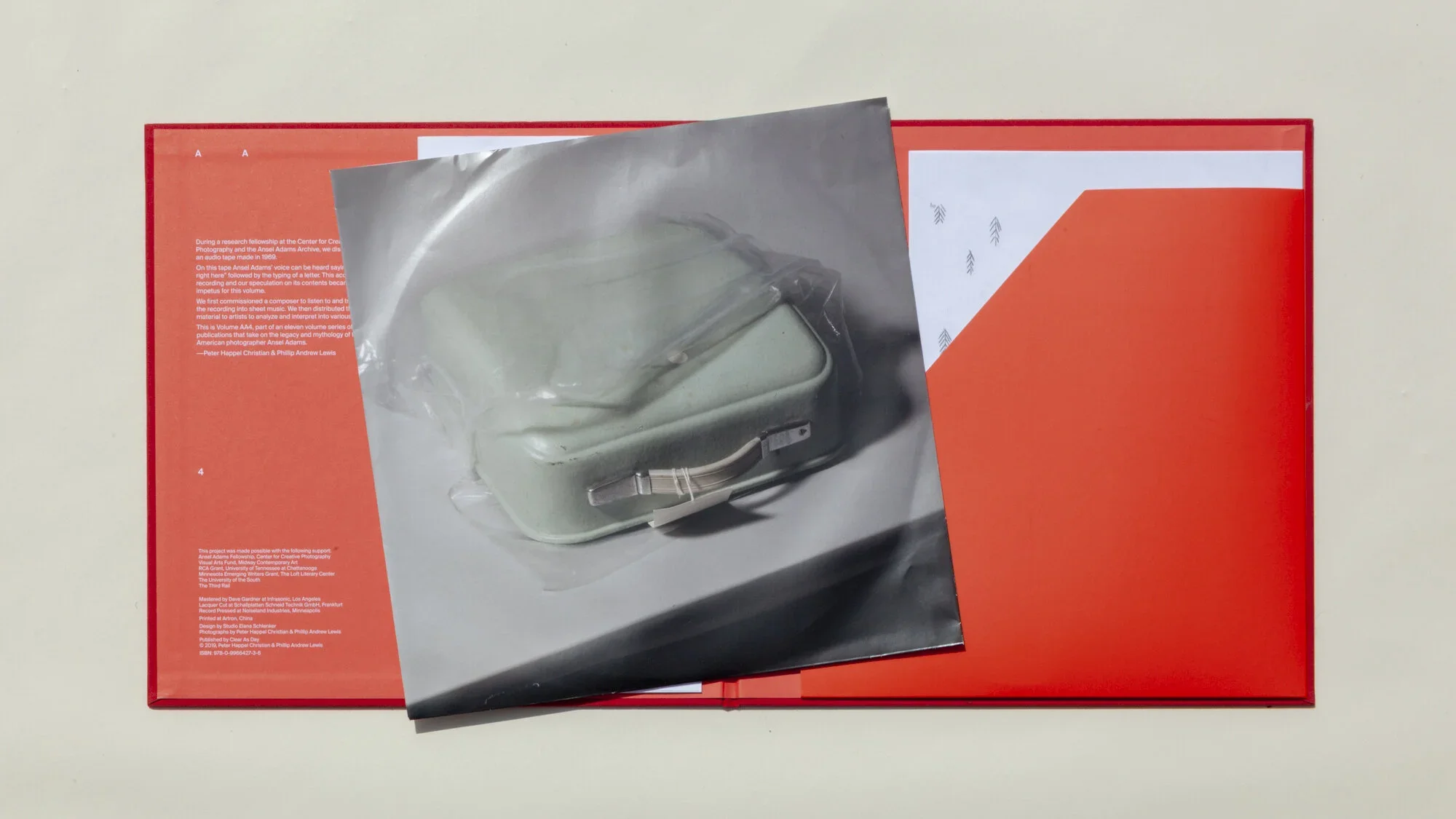
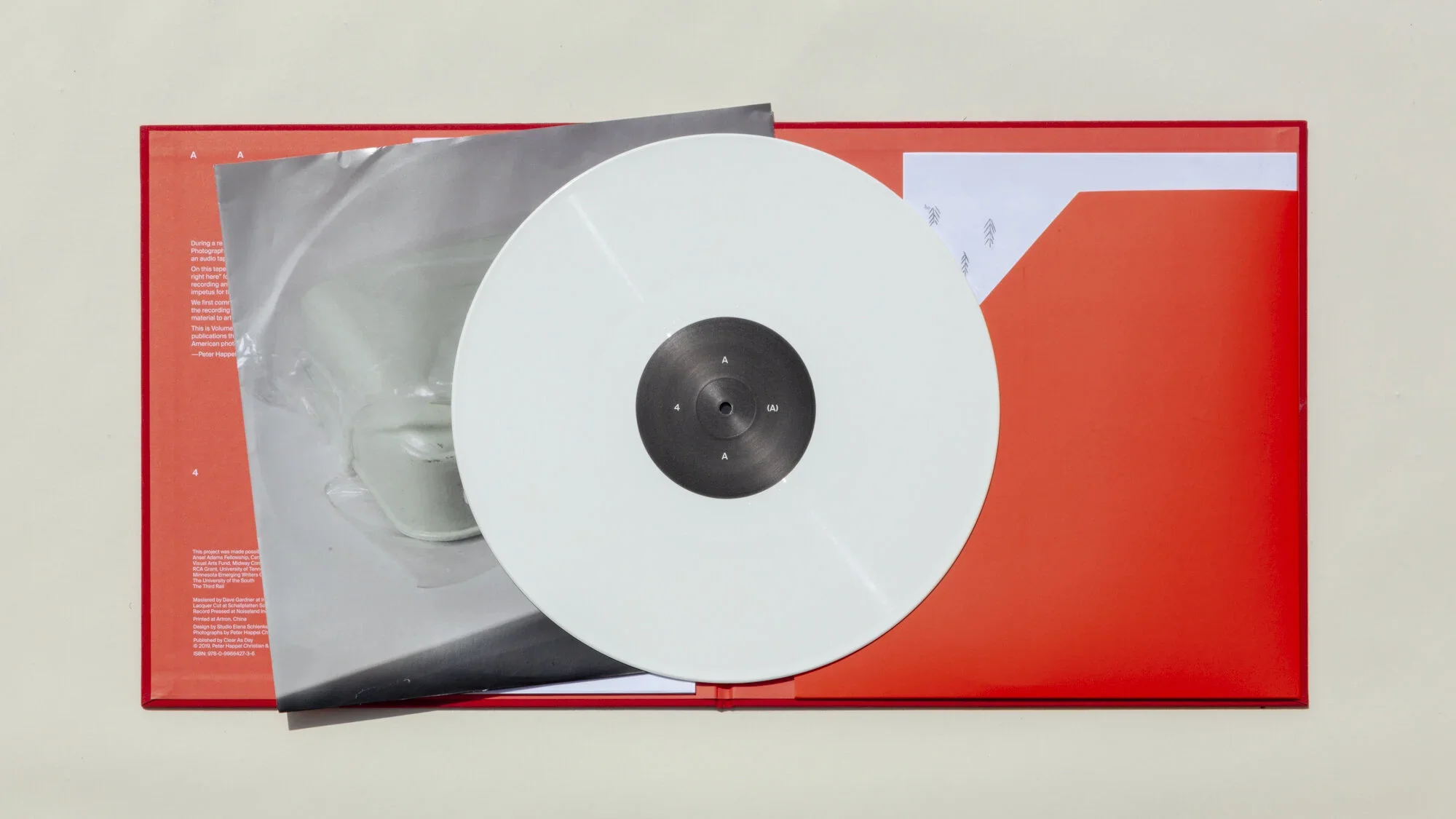
2019 / Vinyl record in sleeve, tipped in booklet, atonal sheet music, printed material, housed in a hardcover portfolio with foil stamping and tipped on photograph. Collaboration: Phillip Andrew Lewis + Peter Happel Christian
Contributors include: Lenka Clayton, Chris Duncan, Barbara Held, Michael Masaru Flora, Jonathan Kaiser, Tiffany Ng, Steve Roden, Greg Pond & Cesar Léal.
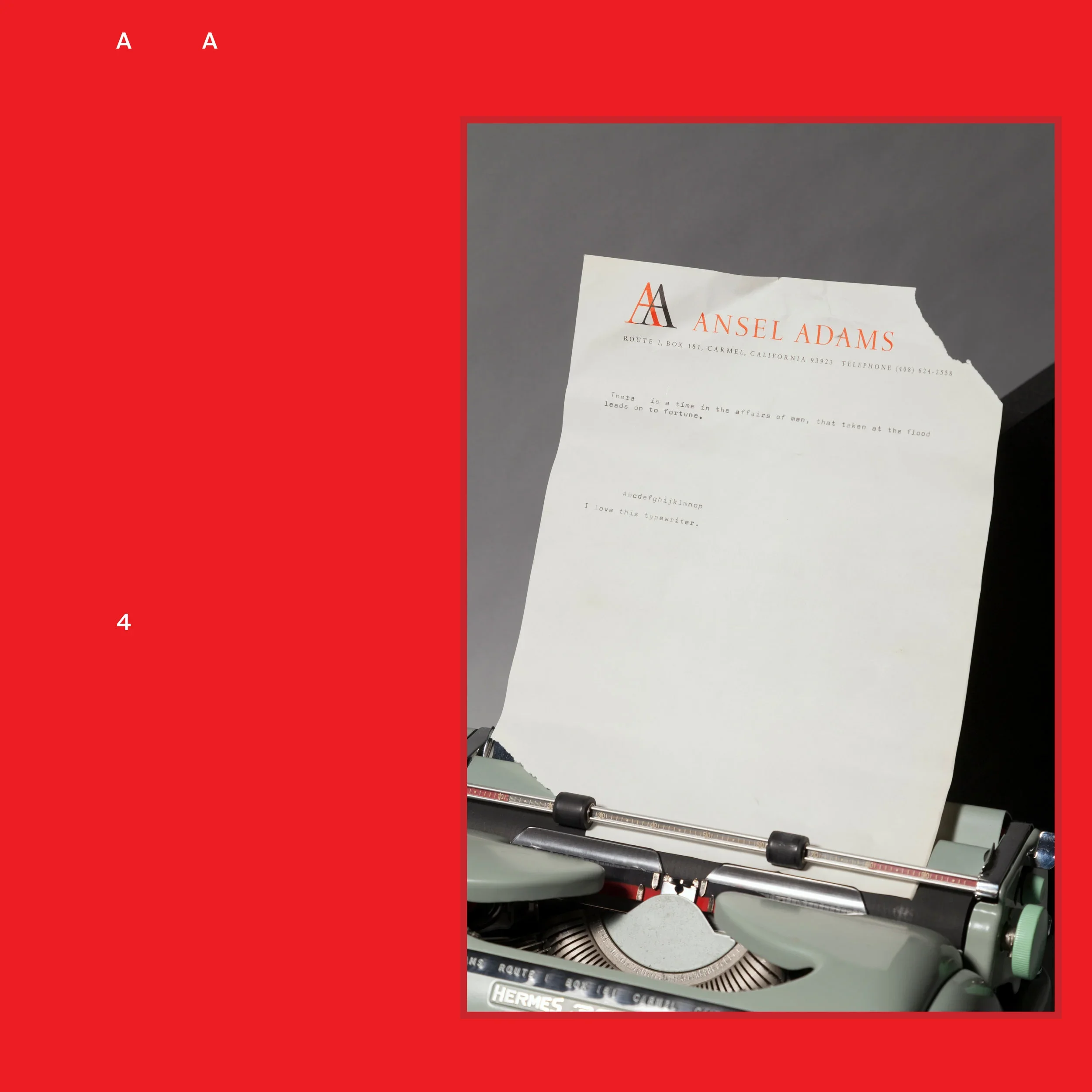
The soul of AA4 is a found audio recording of a letter typed by Ansel Adams, the contents of which are unknown. Working with a sheet music transcription of the typewriter sounds as an original musical score, Peter Happel Christian and Phillip Andrew Lewis, who have collaborated on art projects since 2007 as Clear As Day, commissioned artists and musicians to execute interpretations of the score to create new sound work interpratations of the typed letter. Included with each copy of AA4 is the sheet music of the original typewriter sound, which can be performed on any instrument by any person. AA4, designed by Elana Schlenker, also includes an experimental text by Godfre Leung, a 12” vinyl record featuring interpretations by eight musicians, and a drawing by Lenka Clayton.
Five Hundred Twenty-Four
Video & sound installation / 30 mins / Collaboration: Phillip Andrew Lewis + Lenka Clayton
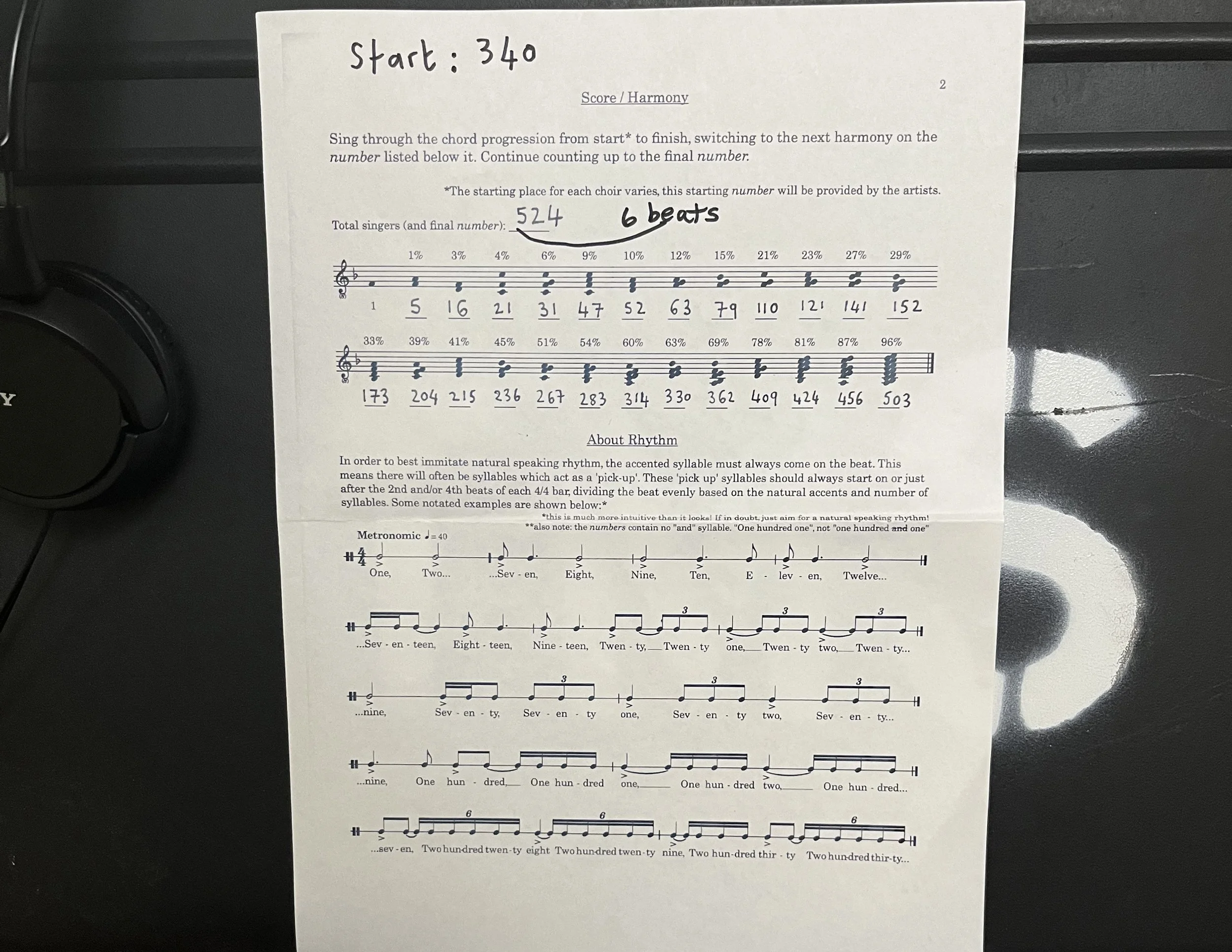
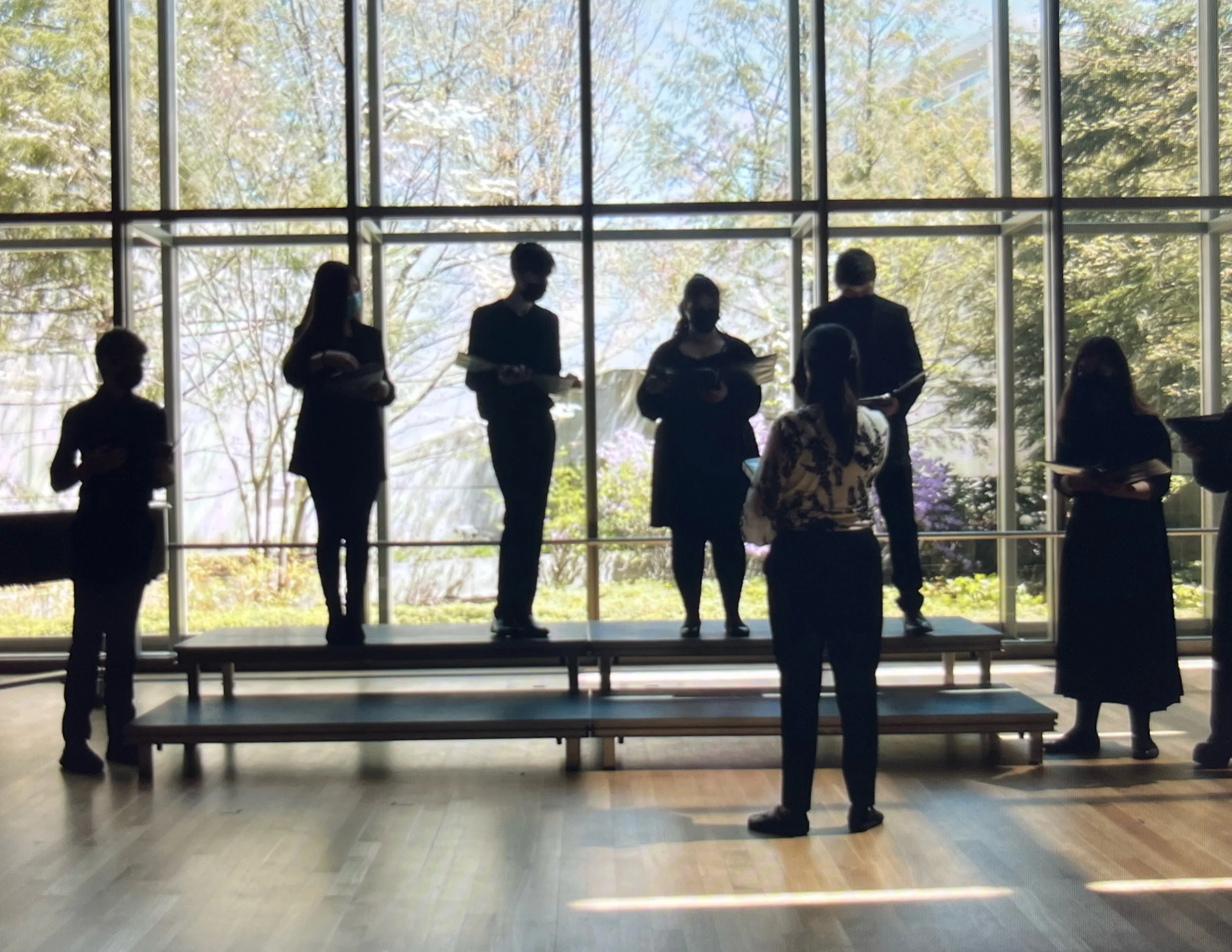
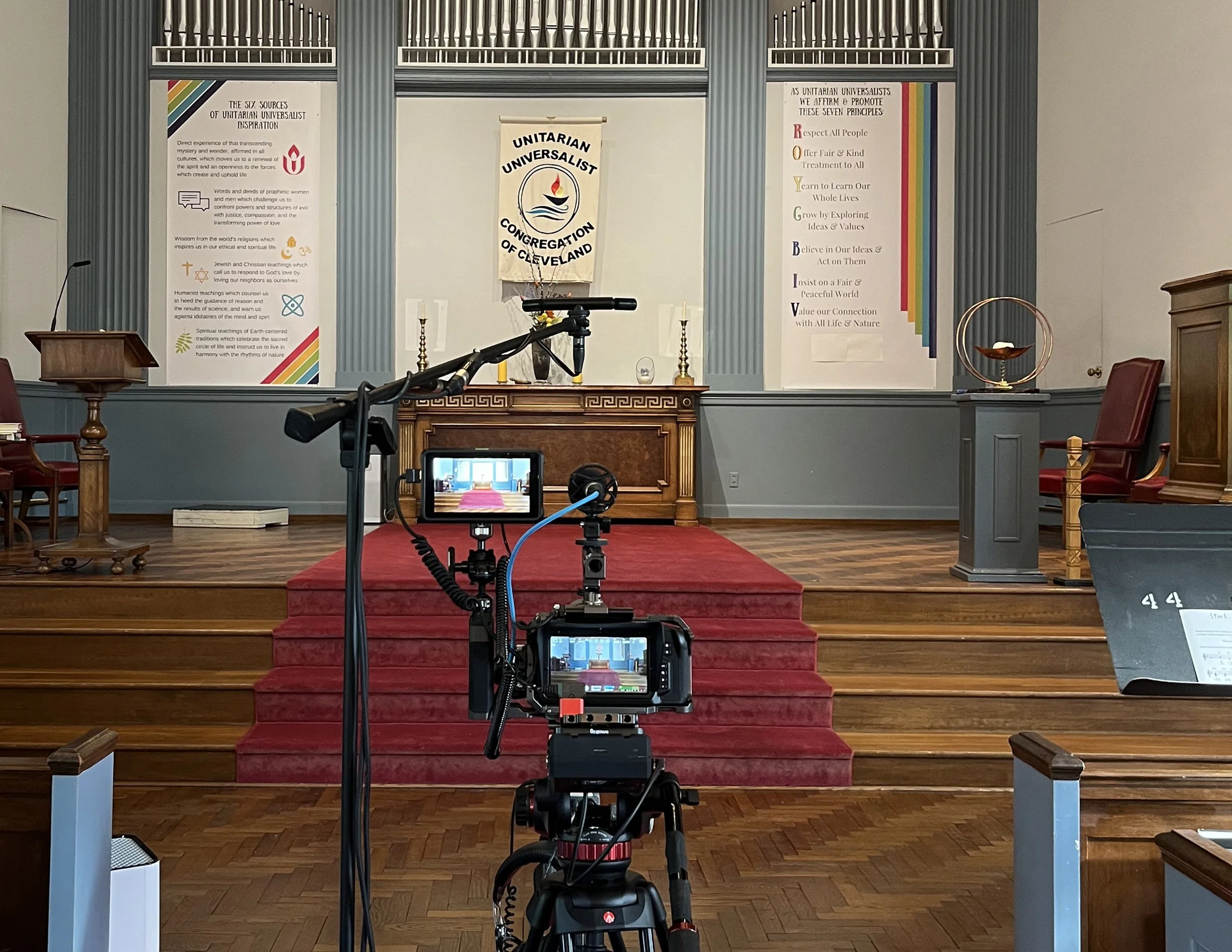
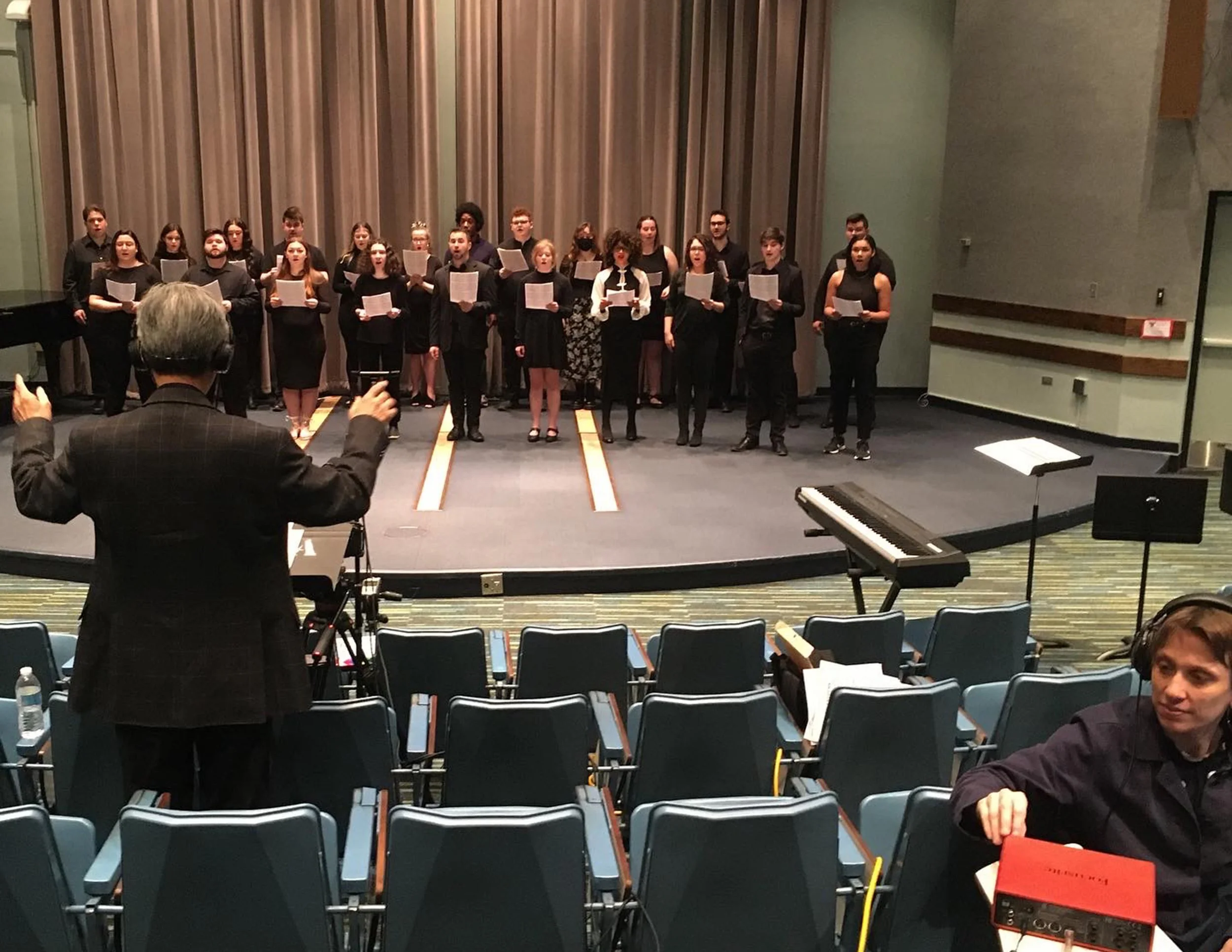
Five Hundred Twenty-Four features singers from twenty one choirs who are all counting numbers in an iterative process: one person sings “one,” then two people sing “two,” and so forth, to 524. Each choir was filmed separately, and the audio was woven together while the video features each choir individually. This work marks the formation and dissipation of a new group made up of pre-existing groups who usually operate separately behind closed doors in different corners of the region. Although the singers may have not been all in the same room, they become one collective musical body digitally. While the piece is sung with a collective voice, every individual is uniquely tasked to begin and end counting at their specific number. The score is a roll call, an audit, a measurement performed by the measured.
Storm IN TEN PARTS
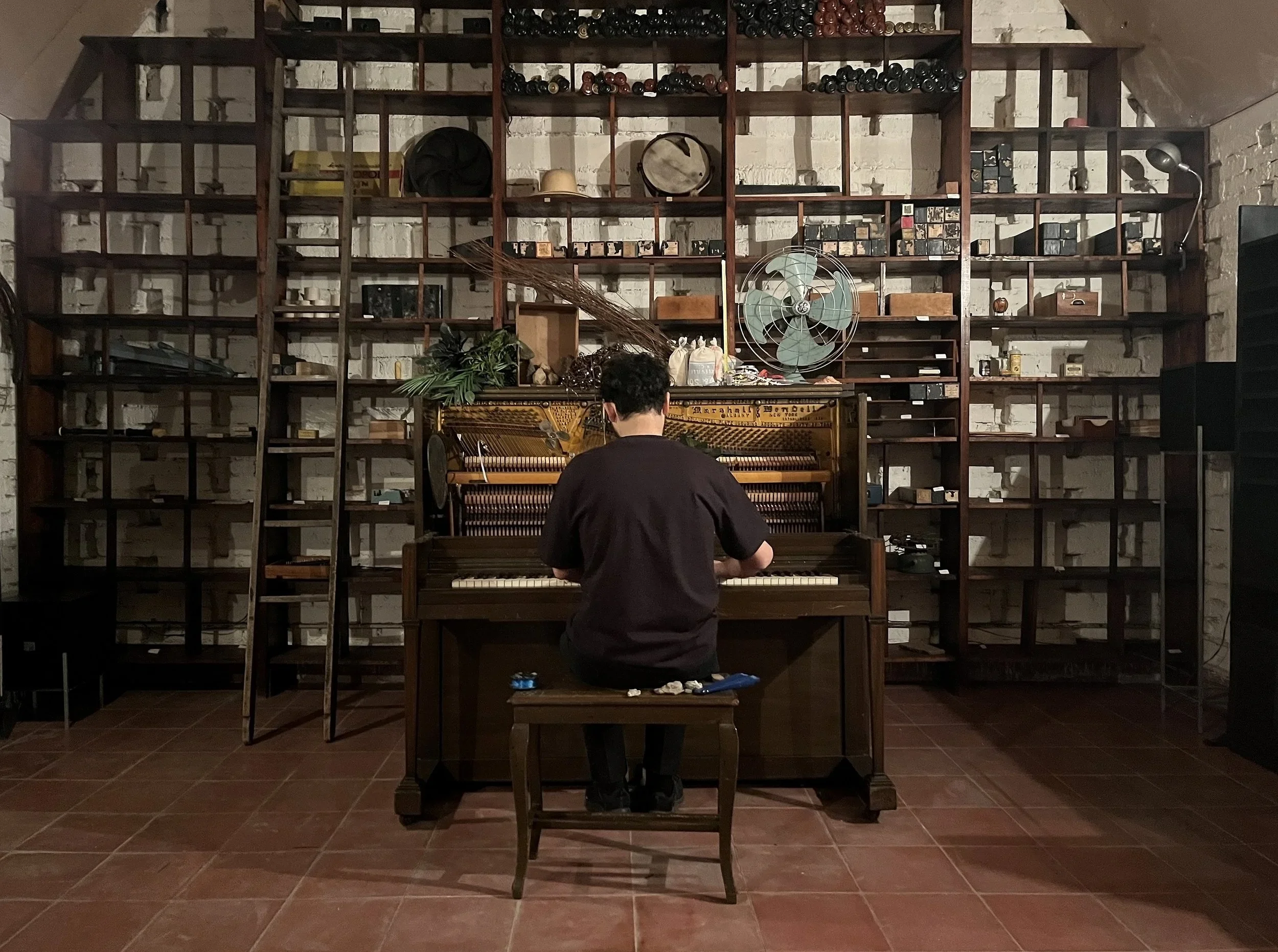
2024 / Video and intervention / Nancarrow House & Studio, Mexico City / Pianist: Dario Acuña Fuentes-Berain / Curator Joseph Del Pesco / Peana / Collaboration: Phillip Andrew Lewis + Lenka Clayton
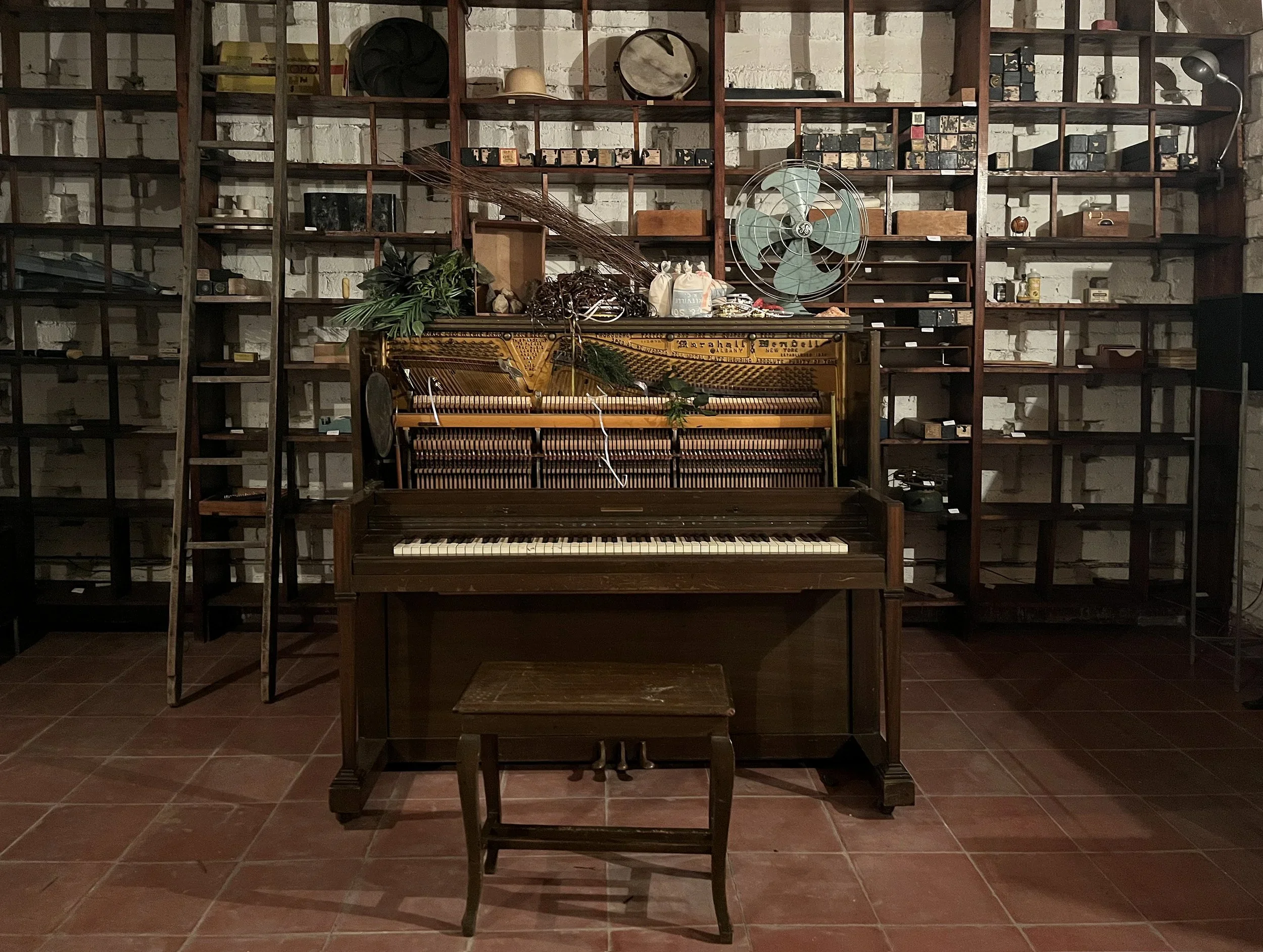
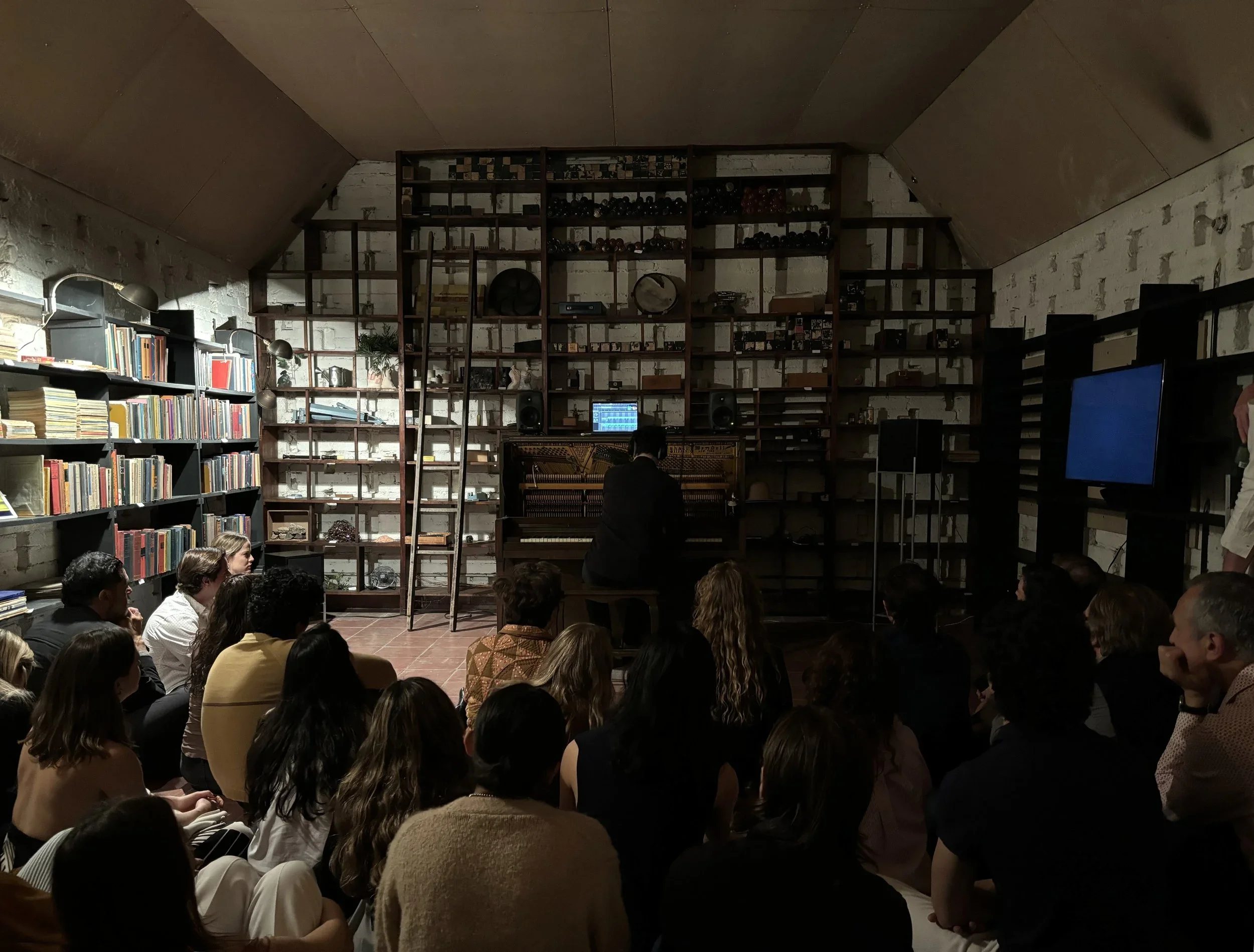
Storm In Ten Parts / Tormenta en Diez Partes is a site-based video, installation and experimental sound work made in collaboration with Mexican pianist Dario Afb. It was exhibited and performed within the late experimental composer Conlon Nancarrow’s home and studio in Mexico City. We were invited by curator Joseph Del Pesco to contribute a meaningful group of objects that would be put to work by Dario to create a unique sound work that would be performed live, as well as installed in the space.
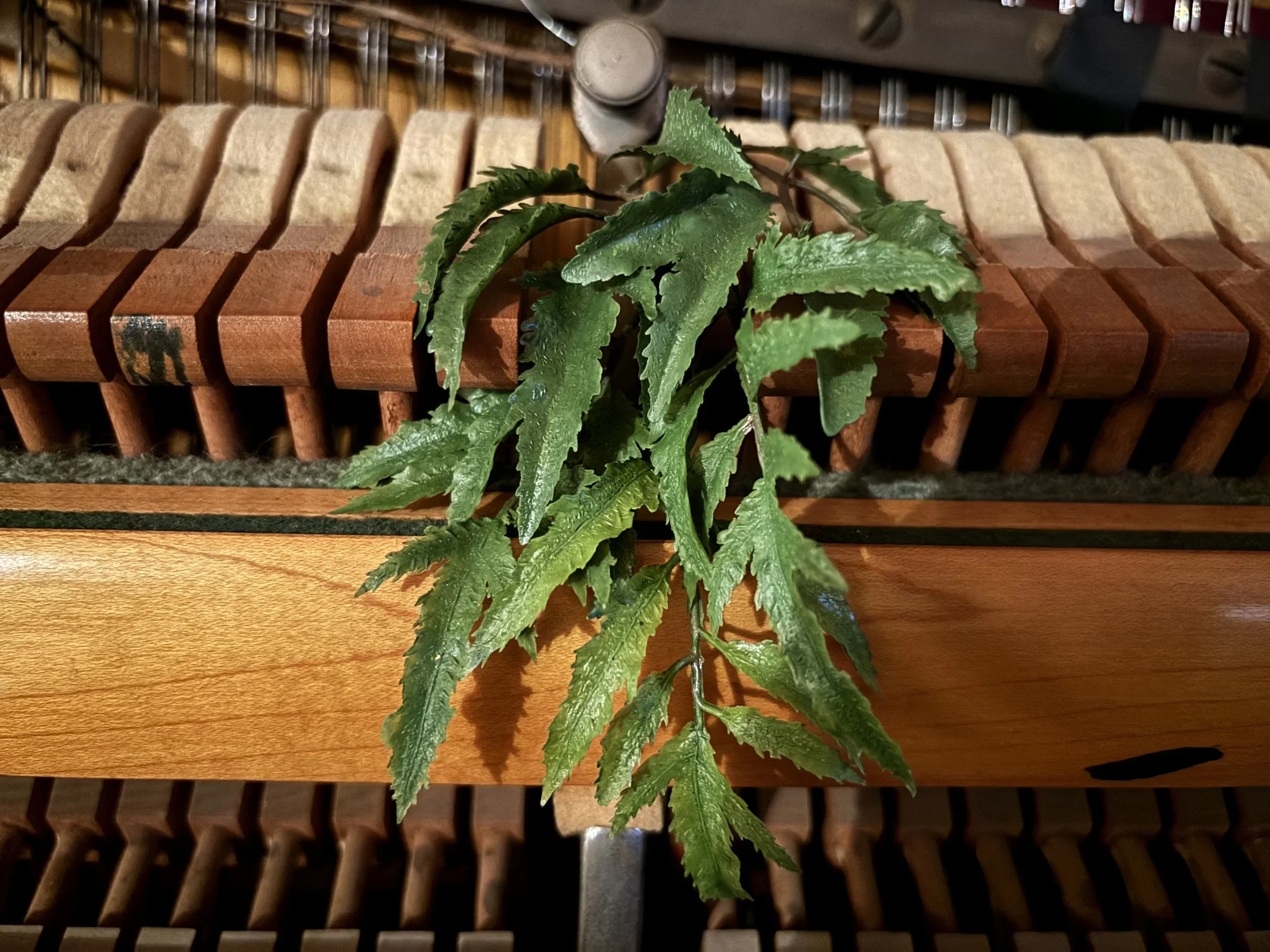
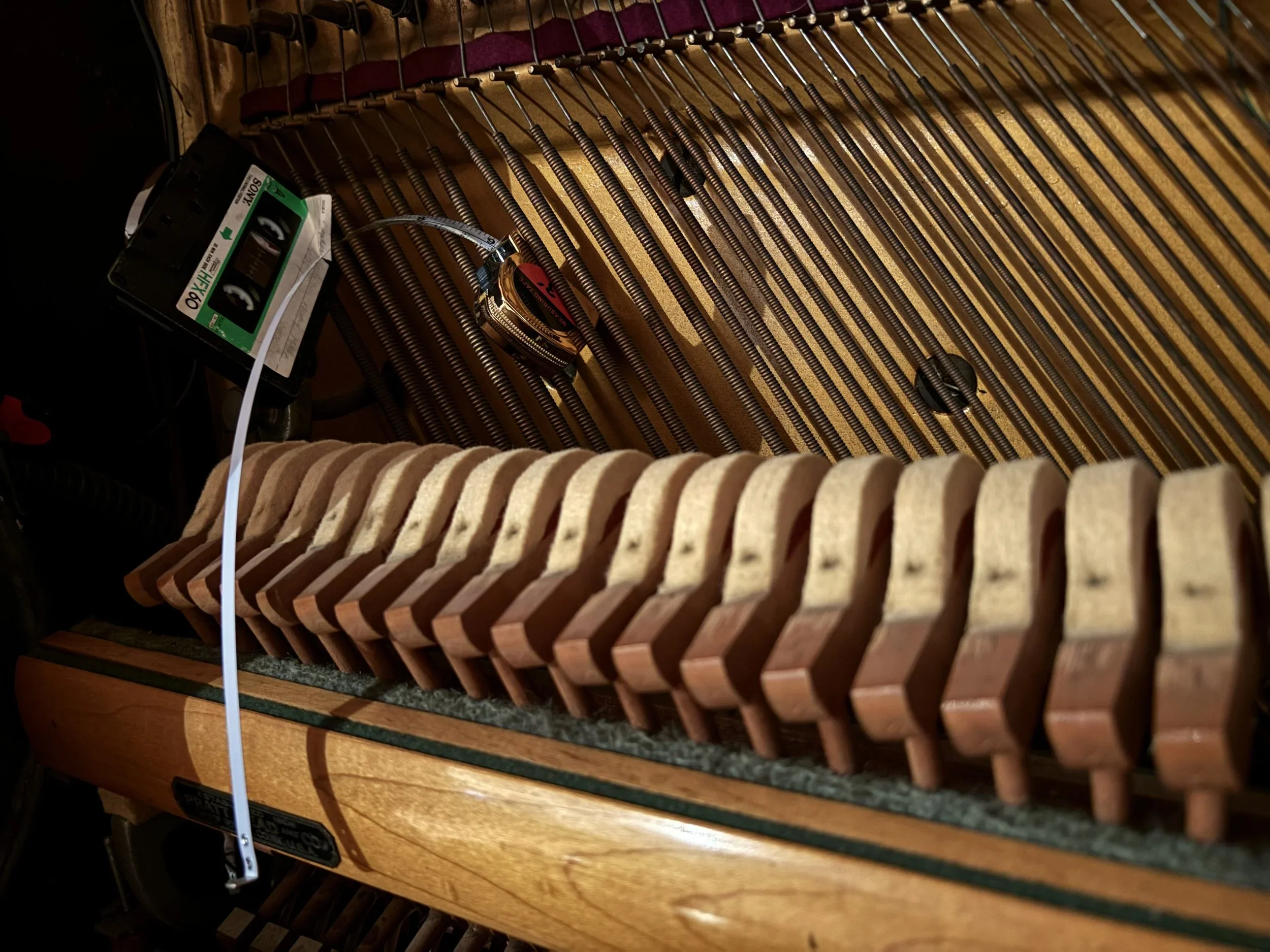
We assembled a collection of objects commonly used by Foley artists to create the varied sounds of a storm for TV, movies and stage. These objects included a box of rocks, a tape measure, a watering can, bamboo canes, plastic ferns, magnetic tape, and a cloth bag of rice starch, among other things. Dario AFB used these objects to prepare the late Conlon Nancarrow’s historic piano in his Mexico City studio, then composed a new work on this altered instrument (below).
The objects themselves were displayed on the shelves in the studio. They were also protagonists in a silent video that documents their activation as storm-sound producers against the beautiful backdrop of Nancarrow’s home and studio (above).
This project was supported in part by an emergency grant from The Foundation for Contemporary Arts. The Foundation For Contemporary Arts was co-founded by John Cage, often considered the inventor of the prepared piano.
The silent video below was a part of the site specific installation. The imagery is meant to prompt the audience to imagine the sound. Each scene is a different location within Nancarrow’s house.
Harmony of the spheres
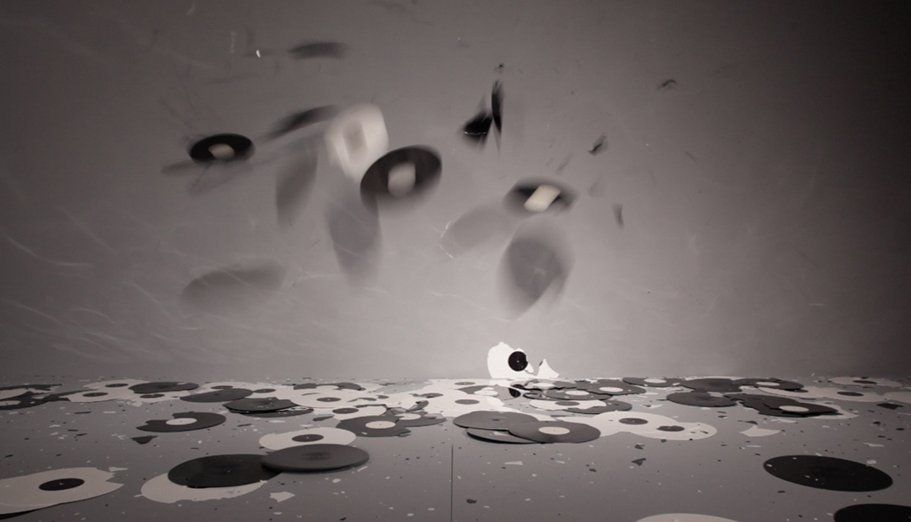
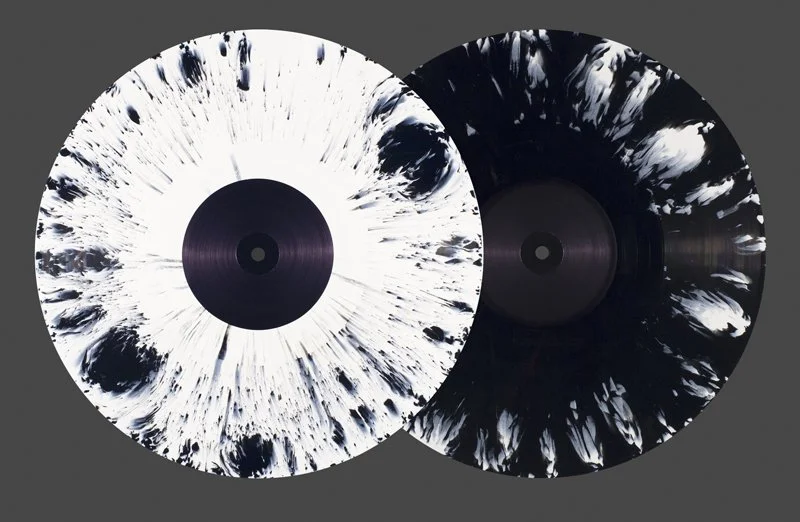
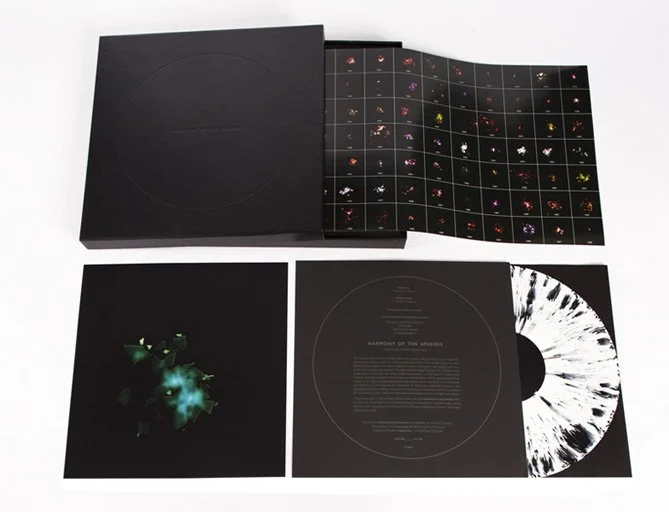
Through the creation and destruction of one-thousand silent vinyl records, a final edition of one-hundred LP records was made entirely from the ruins.
Side A contains the sounds of the buzzing factory as it works to press the 500 white and 500 black silent grooveless records.
Side B presents their audible destruction as they are thrown against a wall.
ThLttldbb
Experimental music albums released under the name THLTTLDBB on Somecold Records, Wormhole, and Unheard Records between 2021-24. The compositions are constructed from vhs and cassette tape loops.
“Barely above that whisper, these quite but deeply stirring pieces seem to feed a collection of processed video and tape loops into the ether; the returning sound waves, broadcasts now sonic mirages, passages of the American strange, the waves lapping onto a cult 50s soft surf soundtrack, or, the breeze blowing gently across the Appalachian Mountains.
AM/FM radio signals crisply spark as glass birds sound and translucent bulbs ring in the resonance of a drone. The nebulous meets the ghostly; traces of a less fearful Twin Peaks and a haunted theatre are suffused in an ebbing ambient cycle. Voices come and go as movie dialogue is manipulated into echoes of the past. The dreamy spells linger as you catch some hallowed or mysterious presence drifting off into the empirical.
Elements of the semi-classical, trip-hop experiments, European library music, old film image reels and analogue ambient music can all be detected and felt on this both organic but artificially constructed, amorphous album. The opening ambient aria beauty, ‘Angela’s Light’, is worth the entrance fee alone."
~Domonic Valvona, Monolith Cocktail
//\///\////\
Composing and sound design for film by Phillip Andrew Lewis
Barbarism Begins At home
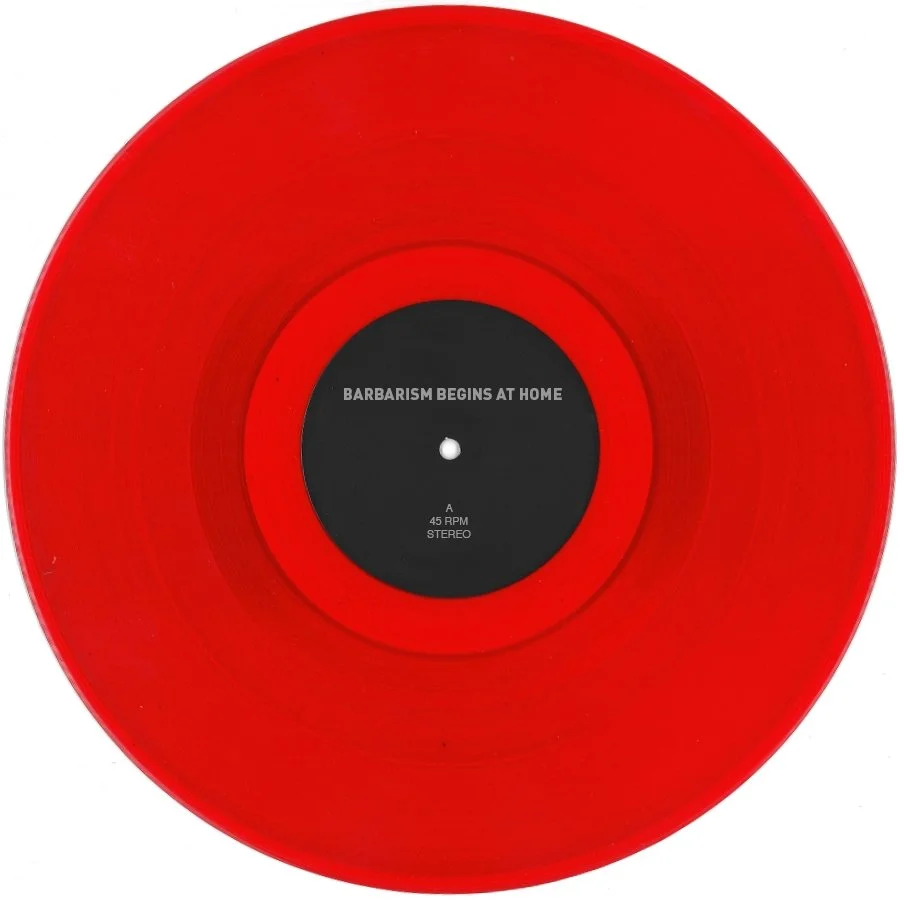
Barbarism Begins At Home, 6m 58s, sound piece made by lining up and playing all nine songs from The Smiths – Meat is Murder album at the same time. The piece begins as a wall of sound and over time as the shorter songs naturally finish a subtractive process reveals the layers ending with a few seconds of the longest track “Barbarism Begins At Home” being solo. The album was pressed into a 12” vinyl single.
The Wind
2024 / 1 hour 17min / Single Channel Video with Sound / Commissioned by The Pittsburgh Cultural Trust / Collaboration: Phillip Andrew Lewis + Lenka Clayton
“The Wind”, a feature-length film meticulously constructed from over 1,000 clips featuring wind taken from hundreds of other movies–from romcoms to westerns, spy dramas and horror movies. These films were all commercially produced, and come from countries all around the world, creating a sense of a shared force that we can observe as it travels around the globe.
Wind footage in films is usually a b-list presence, used to foreshadow imminent, often ominous change, and provide an emotional or temporal cut. These overlooked scenes are amassed in The Wind in increasing intensity according to the Beaufort Wind Scale from plants that almost imperceptibly quiver, to a tornado that tears a building from its foundations.
Each clip of wind has its original sound. Sometimes this is the wind itself, but more often it carries fragments of tone, dialogue, music, or the edge of dramatic action from its previous context. We look at a cherry orchard through falling blossoms and hear a blood curdling scream. We see an uninhabited farmhouse and hear a car door slam behind us. These seemingly random audio concrete poetry is connected by the repeated visual of the wind that increases in force as the film develops.
Remainder
2022 / video 20:42 looped / Single channel video with sound / Edition of 8 + 3AP
Video work developed from the installation Remainder. Black sand is poured between a graduated series of vessels by an off-screen museum curator. The vessels were loaned from the Joseph Allen Skinner Museum originating from cultures across four continents over the course of 400 years.
In the permanent public collections of Mount Holyoke College Art Museum and Fidelity Investments Ireland.
*this features foley sound